
Updated On: April 07, 2024 by  Ahmed Samir
People invest in the most costly universities because they believe a high-quality education will lead to a brighter future. The ability to acquire the knowledge, abilities, and morality necessary to thrive is made possible by education, which is essential to human progress. The importance of quality education in determining one’s destiny and the course of society as a whole cannot be overstated. Critical thinking and problem-solving skills improve one’s employability and promote society.
Education increases employability by providing individuals with the information and abilities necessary to be successful in the work market. A good education is more important than ever as the world becomes more competitive. Nowadays, many firms need candidates to have a specific level of education before considering them for a post. A solid educational foundation may help job seekers stand out in a competitive job market. As a result, parents, guardians, and students are always willing to pay for a quality education that will enable them to get well-paying employment.
Why are Expensive Universities Worth It?
I couldn’t agree more that studying in expensive universities is a great investment. People are spending lots of money on high-quality education “universities” for many reasons, like:
- Companies occasionally have preferences for graduates of prestigious universities. It might be due to the intense rivalry for admittance to prestigious or expensive institutions, where only the brightest, best-performing students will be accepted. Because they have been pre-screened and shown to be top performers, employers favour these individuals.
- The quality of the education received exceeds that of a smaller, less costly institution. Elite universities have the means to offer students greater instruction and more opportunities to learn about their chosen field.
- The expensive academic staff members are specialists in their fields, work shorter hours, have significant industrial and study experience, and most likely have global connections. Therefore, they spend more time doing a study to keep their topics current. These elite professors work in expensive universities.
- Branding plays a significant role in many professions, so attending a more “famous” (and probably more expensive) institution will significantly influence the future and learning. So students are always looking for the most famous universities.
- The importance of networking and the fact that more costly schools frequently offer “better” networking opportunities through alumnae and “old boy” networks are just a couple of the many explanations for this. Additionally, the most costly colleges and universities frequently invest resources, time, and staff into strong support infrastructures, including job counselling and extracurricular opportunities, to maintain their reputation.
- Making informed choices is one of the main advantages of a decent education. People gain the ability to critically examine information, assess the reliability of the proof, and develop reasoned views through education. It is especially crucial in the complicated and fast-paced world we live in today, where we are continuously inundated with data from various sources. A quality education gives people the skills to manage this information deluge and comprehend their surroundings. This type of high-quality education is found in expensive universities.
A “big-name” or well-respected school’s return on investment will likely is worth the high upfront cost. It is why so many students are willing to incur massive debt to expect their school of choice to succeed.
What are the Most Expensive Universities in the World?
For many students and families, higher education is expensive; going to college is one of the biggest financial burdens a person may experience. However, as previously noted, acquiring the greatest education can boost employability. Here are some of the world’s most esteemed and pricey colleges:
1. Harvey Mudd College
With annual tuition and fees of nearly $72,000, Harvey Mudd College in Claremont, California, is considered an expensive institution of higher education, making it out of reach for many students. However, the school offers a rigorous and highly regarded education in technology, engineering, science, and mathematics (STEM) for those who can afford it.
Due to its tiny class sizes and low student-to-faculty ratio, Harvey Mudd is an expensive university. A large investment in staff and resources is also needed because the school gives each student individualised attention and teaching.
2. University of Chicago
The University of Chicago is another highly-ranked and expensive university; It charges over $75,000 per year for tuition and fees. Like Harvey Mudd, the University of Chicago is known for its strict academic programmes and highly selective admissions process.
One of the reasons contributing to the high tuition at the University of Chicago is its substantial research infrastructure and programmes. The institution invests significantly in scientific research, and its faculty includes several Nobel laureates and MacArthur Genius Award winners. The college also offers extensive financial aid packages to students, which helps those who qualify lower the high cost of tuition.
3. Columbia University
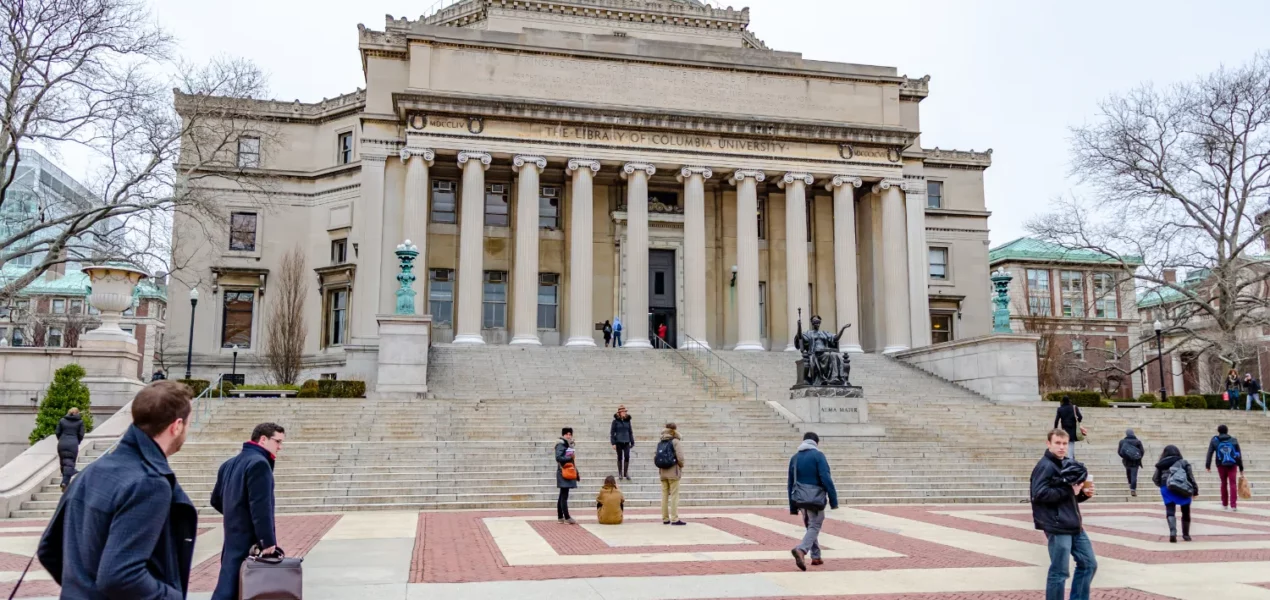
Columbia University, Located in New York City, is very prestigious and expensive. With tuition and fee of over $77,000 per year, attending Columbia is a significant financial commitment for students and families.
Despite being located in one of the most expensive cities in the world, New York, Columbia University is affordably priced. University students pay the infamously expensive housing, transportation, and living costs of New York City. Additionally, Columbia invests heavily in research and offers a wealth of resources to students, including access to elite academic programmes, labs, and libraries.
4. California Institute of Technology
The California Institute of Technology, known as Caltech, is located in Pasadena, California, and it is very prestigious and expensive, like Columbia University. With tuition and fee of over $77,000 per year, attending Caltech is a significant financial commitment for students and families.
The high expense of Caltech is due to its focus on scientific research and innovation. As a result, the school makes large expenditures on its research initiatives and infrastructure, and its faculty includes several Nobel laureates and other notable researchers. Additionally, the school’s small class sizes and high teacher-student ratio ensure that every student receives a customised education.
5. Massachusetts Institute of Technology
Massachusetts Institute of Technology (MIT) is in Massachusetts, Cambridge, and is very prestigious and expensive. With tuition and fee of over $77,000 per year, attending MIT is a significant financial commitment for students and families.
MIT is well known for emphasising innovation and scientific research, similar to Caltech. Numerous Nobel laureates and other prominent scientists are on the university’s faculty, and it makes significant investments in its research programmes and infrastructure. MIT offers its students many resources, including first-rate academic programmes, labs, and libraries.
6. New York University
New York University (NYU) is located in New York City, with an annual tuition and fee of over $76,000. NYU is a private research university that offers a wide range of academic programmes across 18 schools and colleges.
Due to NYU’s location in New York City, which has a high total cost of living, tuition is expensive. However, the city’s notoriously high housing, transportation, and lifestyle expenditures are covered by university students. Additionally, NYU makes significant research investments and provides its students with various resources, including access to top-notch academic programmes, labs, and libraries.
7. Imperial College London
Imperial College London is one of Europe’s most prestigious and expensive universities. With a tuition and fee of over £33,000 per year (equivalent to over $45,000), attending Imperial is a significant financial commitment for students and families.
Imperial’s high price is a result of its location in London, one of the most expensive cities in the world. London is known for having expensive housing, transportation, and lifestyle expenditures passed on to university students. Imperial also makes significant research investments and provides students with many resources, including access to top-notch academic programmes and laboratories.
8. University of Oxford
The University of Oxford is considered the oldest and most prestigious university in the world, with a history from the 12th century. With a tuition and fee of over £25,000 per year (equivalent to over $34,000), attending Oxford is a significant financial commitment for students and families.
Due to its challenging admissions procedure and demanding academic programmes, Oxford has high tuition prices. As a result, the university attracts the best scholars from all over the world, and its faculty comprises several Nobel laureates and other distinguished professors. Oxford also makes large research expenditures and offers many resources to students, including access to top-notch academic programmes and libraries.
9. University of Cambridge
The University of Cambridge is another prestigious and expensive university in the United Kingdom. With a tuition and fee of over £25,000 per year (equivalent to over $34,000), attending Cambridge is a significant financial commitment for students and families.
Much like Oxford, Cambridge is highly selective and renowned for its demanding academic programmes. The institution draws top academics worldwide, and its faculty comprises several Nobel laureates and other distinguished intellectuals. Cambridge also makes significant research investments and provides students with many resources, including access to top-notch academic programmes and libraries.
10. École Polytechnique
École Polytechnique is one of Europe’s most prestigious and expensive universities in France. With a tuition and fee cost of over €14,000 per year (equivalent to over $16,000), attending École Polytechnique is a significant financial commitment for students and families.
École Polytechnique is highly expensive since it values innovation and scientific research highly. However, the university is recognised for its challenging academic programmes in science, engineering, and mathematics and its stringent admissions process. Additionally, École Polytechnique invests heavily in research and offers a wealth of resources to students, including access to top-notch academic programmes and laboratories.
In conclusion, enrolling in the world’s most prominent and costly universities costs a lot of money. These colleges offer students very selective admissions procedures, demanding academic courses, and a wealth of resources, but not everyone can attend due to their high costs. Because of this, prospective students and their families must carefully assess the financial costs associated with treating these institutions and balance any potential advantages against the considerable financial load. Nevertheless, getting this top-notch education will allow you unity to land a high-paying career, what everyone wants.