
Updated On: April 07, 2024 by  dina
dina
Bottled water has gained popularity worldwide as a beverage option because several brands and varieties are available. Some bottled water brands are known for their high price tags, attributed to unique sourcing, limited production, luxury packaging, and sophisticated marketing and branding efforts. However, whether or not expensive bottled water is worth the cost compared to tap water or less expensive bottled water brands is a matter of debate.
Expensive water is bottled water that costs more than standard bottled water. The price of these waters can vary significantly depending on factors such as the brand, packaging, and source of the water. For example, some expensive waters may be sourced from remote or exotic locations, while others may feature luxury packaging or be marketed as premium or exclusive products. The taste and quality of expensive waters may also factor in their higher price, with some brands claiming to offer unique mineral compositions or other health benefits. The cost of water can vary significantly, and some costly brands might not necessarily provide superior flavour or quality than less expensive ones.
What Are the World’s Priciest Bottled Water Brands In the World?
The price of water can vary significantly depending on the brand, packaging, and location. Here are some of the priciest water brands available worldwide include:
Acqua di Cristallo Tributo a Modigliani
Acqua di Cristallo Tributo a Modigliani is a luxury brand of water that is considered the most expensive water in the world, priced at $60,000 per 750 ml bottle. Acqua di Cristallo Tributo a Modigliani is sourced from a natural spring in Tuscany, Italy, and is said to have a unique taste due to its mineral content.
One of the world’s priciest bottled waters is Acqua di Cristallo Tributo a Modigliani. This water is sourced from springs in France and Fiji and filtered through volcanic rocks and gemstones before bottling. The water is also infused with 5 milligrams of 23-karat gold dust, adding to its luxuriousness and health benefits.
Acqua di Cristallo Tributo a Modigliani is named after the Italian artist Amedeo Modigliani. The bottle’s design resembles a work of art, with a unique shape and gold-plated decorations. The water is packaged in a limited edition, handcrafted bottle made of 24-karat gold, which adds to its exclusivity and high price tag.
Acqua di Cristallo Tributo a Modigliani’s water, is marketed as a luxury product sold to high-end restaurants and hotels. While Acqua di Cristallo Tributo a Modigliani is certainly an exclusive and luxurious product, it’s worth noting that the high price tag can largely be attributed to its unique packaging, marketing, and branding rather than any actual difference in taste or quality compared to other bottled waters.
Fillico
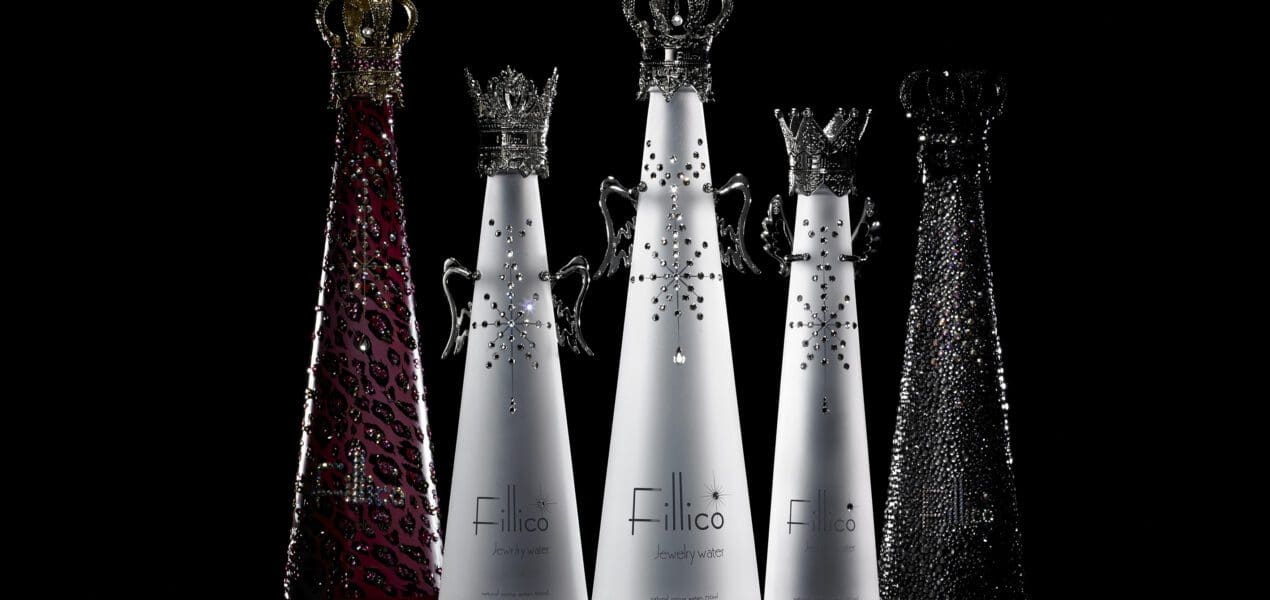
This Japanese bottled water brand is priced at around $219 per 750 ml bottle. The water is sourced from the Kobe region of Japan and is known for its elegant packaging, which includes a bottle cap made of Swarovski crystals.
Fillico is another luxury bottled water brand known for its high price and elaborate packaging. Fillico’s water is sourced from natural springs located in Kobe, Japan, and is bottled in small quantities, which adds to its exclusivity.
Fillico is sold in various unique and ornate bottles, including a 24-karat gold-plated bottle shaped like a crown, a bottle illustrated with Swarovski crystals, and a bottle shaped like the Eiffel Tower. In addition, each bottle is handcrafted and individually numbered, further adding to the brand’s exclusivity.
Besides its unique packaging, Fillico is marketed as a luxury product, and several high-profile celebrities, including Taylor Swift and Mariah Carey, have endorsed the brand. Fillico’s water has a smooth and refreshing taste, and it is claimed to be rich in minerals and other beneficial compounds.
However, the high price of Fillico can largely be attributed to its marketing, branding, and packaging rather than any actual difference in taste or quality compared to other bottled waters. Some critics have noted that the taste of Fillico is similar to other, less expensive bottled water brands. While Fillico is an exclusive and luxurious product, its high price tag is primarily due to its marketing and packaging. Therefore, consumers should consider whether the unique bottle and branding are worth the cost.
Bling H2O
This American bottled water brand is priced at around $40 per 750 ml bottle. Bling H2O is sourced from a natural spring in Tennessee and is marketed as a luxury product due to its eye-catching packaging, which includes Swarovski crystals and a frosted glass bottle.
Bling H2O is a luxury bottled water brand known for its extravagant packaging and high price tag. Bling H2O’s water is sourced from natural springs in the Smoky Mountains of Tennessee and is said to be naturally pure and refreshing.
Its elaborate packaging sets Bling H2O apart from other bottled water brands. The water is sold in bottles adorned with Swarovski crystals, giving the brand a glamorous and luxurious look. In addition, each bottle is individually numbered and comes with a custom-designed cap.
Bling H2O is marketed as a luxury product primarily sold in high-end hotels, restaurants, and nightclubs. Many celebrities, like Paris Hilton and Mariah Carey, have supported the brand. While Bling H2O’s packaging is certainly eye-catching and luxurious, some critics have noted that the taste of the water itself is not significantly different from other bottled water brands and that the high price tag can largely be attributed to the cost of the crystals and packaging.
Overall, while Bling H2O is an exclusive and luxurious product, consumers should consider whether the unique packaging and branding are worth the cost, especially given that the taste and quality of the water may be similar to other, less expensive bottled water brands.
Kona Nigari Water
This Hawaiian bottled water brand is priced at around $33 per 500 ml bottle. Kona Nigari Water is sourced from deep ocean water off the coast of Kona, Hawaii, and is said to be rich in minerals and electrolytes.
Kona Nigari Water is a premium bottled water brand sourced from deep ocean water off the coast of Hawaii. The water is filtered through volcanic rock, which gives it a unique mineral composition and a refreshing taste.
Kona Nigari Water is marketed as a health and wellness product and is claimed to have several health benefits due to its mineral content. Kona Nigari Water’s water is rich in magnesium, essential for maintaining healthy bones, muscles, and nerves.
The high price of Kona Nigari Water can be attributed to several factors. Firstly, the water is sourced from a deep ocean location off the coast of Hawaii, which requires specialized equipment and infrastructure for harvesting and bottling. And the water is marketed as a premium health and wellness product, which adds to its exclusivity and high price tag.
Kona Nigari Water is primarily sold in Japan and other Asian markets, with a strong demand for premium bottled water brands. In addition, the water is sold in a distinctive blue bottle designed to resemble a water droplet, further adding to its exclusivity and unique branding.
Overall, while Kona Nigari Water is a premium product, consumers should consider whether the water’s health benefits and unique mineral composition are worth the high cost, especially given that tap water and other less expensive bottled water brands may offer similar benefits at a lower price point.
Svalbarði
This Norwegian bottled water brand is priced at around $90 per 750 ml bottle. It is sourced from icebergs harvested from the Arctic Ocean and is said to have a unique taste due to its purity and freshness.
Svalbarði is a premium bottled water brand sourced from icebergs in the Svalbard archipelago, located in the Arctic Ocean near the North Pole. The water is harvested from icebergs that are over 4,000 years old and are free from pollutants and contaminants, making Svalbarði one of the purest water sources in the world.
The water is naturally filtered by snow and ice layers, giving it a unique mineral composition and a refreshing taste. Svalbarði is marketed as a luxury product primarily sold in high-end restaurants, hotels, and retail stores.
The high price of Svalbarði can largely be attributed to its exclusive sourcing and limited production. The water is harvested by hand from icebergs accessible by boat, and each iceberg can yield only a limited amount of water. Additionally, the brand’s marketing and branding add to its exclusivity and high price tag.
Svalbarði is sold in a distinctive white bottle designed to resemble the shape of an iceberg, further adding to the brand’s unique and exclusive image.
Overall, while Svalbarði is a premium product, consumers should consider whether the water’s exclusive sourcing and unique mineral composition are worth the high cost, especially given that tap water and other less expensive bottled water brands may offer similar benefits at a lower price point. The prices may vary depending on location and availability.
Why Are These Brands So Expensive?
These water brands’ high price tags are typically brought on by several elements, such as:
- Unique sourcing: Some of these brands are sourced from remote, exotic locations, which can make the water more difficult and expensive to obtain.
- Limited production: Some of these brands may have limited production, with only a few bottles available each year, which can increase the price due to the exclusivity factor.
- Luxury packaging: The packaging features high-end materials, such as frosted glass, Swarovski crystals, or other luxury materials, which can add to the cost of production and make the product more visually appealing to consumers.
- Marketing and branding: Some of these brands are marketed as luxury or premium products, with high-end branding, advertising, and promotion to create an image of exclusivity and sophistication; this can also contribute to the higher price point.
So, The high cost of these water products is frequently the result of several factors, including distinctive sourcing, constrained manufacturing, opulent packaging, and sophisticated marketing and branding initiatives, which give customers a sense of exclusivity and luxury.
What Is The Purest Bottled Water In The World?
The concept of purity varies based on the source and make-up of the water, even though many bottled water brands make this claim. However, one example of a brand known for its purity is the Norwegian brand Svalbarði.
Svalbarði is sourced from icebergs harvested from the Arctic Ocean. The company claims that the water is some of the purest in the world, with no detectable impurities or contaminants. In addition, the water is collected using a custom-designed rig that allows the icebergs to be harvested in an environmentally sustainable way and does not damage the delicate Arctic ecosystem. The purity of Svalbarði water and its unique source and environmentally-friendly harvesting methods contribute to its higher price point. A 750 ml bottle of Svalbarði water typically costs around $90, making it one of the most pricey bottled waters in the world.
Svalbarði water is advertised as a luxury product because of its rarity and purity; the taste of the water may not be significantly different from other, less expensive bottled water brands. The high price point of Svalbarði and other expensive bottled water brands is often due to marketing, branding, and packaging, as well as the perception of exclusivity and luxury that these products can create among consumers.
Is It Worth It to Get Expensive Bottled Water?
The decision to purchase expensive bottled water ultimately depends on individual preferences and priorities. While some people may be willing to pay a premium for bottled water sourced from unique or exotic locations, others may place less value on the origin or packaging of the water.
In many cases, the taste and quality of expensive bottled water may be similar to less expensive brands. Additionally, tap water in many parts of the world is subject to strict quality and safety standards and is as clean and safe to drink as bottled water.
That being said, some people may prefer the taste or composition of certain bottled water brands or may be drawn to the exclusivity or luxury of high-end bottled water products. Others may be willing to pay a premium for environmentally-friendly or socially responsible water brands. Ultimately, deciding to purchase expensive bottled water is personal, and it’s essential to consider factors such as taste, quality, source, and price.
Is Expensive Bottled Water Recommended Over Tap Water?
Generally, tap water in many parts of the world is subject to strict quality and safety standards and maybe just as clean and safe to drink as bottled water. Sometimes, tap water may be even safer in some cases than bottled water, as it is subject to more rigorous testing and regulation.
That being said, there may be instances where people prefer the taste, mineral content, or other characteristics of certain bottled water brands. Additionally, some people may live in areas where the taste or quality of tap water could be more desirable or may be concerned about potential contaminants in their tap water.
Ultimately, whether to choose expensive bottled water over tap water depends on individual preferences and circumstances. However, it’s essential to consider factors such as taste, quality, safety, and price. Additionally, it’s worth considering the environmental impact of bottled water, as the production and transportation of bottled water can contribute to carbon emissions and other environmental issues.
Conclusion
Expensive bottled water brands may offer unique sourcing or other characteristics that set them apart from other bottled waters; the high price of these products can often be attributed to marketing, branding, and packaging rather than actual differences in taste or quality. Tap water in many parts of the world is subject to strict quality and safety standards and maybe just as clean and safe to drink as bottled water. Ultimately, the decision to purchase expensive bottled water over tap water or less expensive bottled water brands depends on individual preferences and circumstances, and it’s essential to consider factors such as taste, quality, safety, and price when making a decision.